


By Cameron Uttley, CFP®, CKA®
Cameron Uttley, CFP®, CKA® is a senior financial planner at John E. Sestina & Company, a fee-only financial planning firm located in Columbus, Ohio. Cameron collaborates with clients on comprehensive, ongoing financial planning that include saving and investing, retirement planning, education funding, insurance reviews, tax considerations, and estate-related topics. Cameron’s focus is on simplifying financial choices, helping clients craft strategies that align with their values, purpose, and long-term goals.
Why Disability Insurance Matters
My wife and I keep a small duck coop at home. A few weeks ago, while filling a bucket of water for the ducks, I bent down to lift it and immediately felt that something in my back was not right. I continued with my day and went to the office, but the pain steadily worsened.
I had strained the muscles around my ribs, causing acute pain and discomfort. Although I have fully recovered, those few days made routine activities difficult, including mowing the lawn, tying my shoes, climbing stairs, and sitting at my desk. Even though I would not have qualified for coverage in my instance since I was able to return to work, the experience brought a familiar planning question into sharper focus: How would an extended illness or injury affect someone’s ability to work and support a household? That question is at the heart of disability insurance.
Many people associate disability insurance only with catastrophic events such as cancer or major injuries. In practice, qualifying claims may arise from a broad range of illnesses, injuries, and medical conditions. Coverage may be provided through an employer or purchased individually, and eligibility depends on the policy’s definition of disability, exclusions, waiting period, and other terms; the condition generally does not need to result from work.
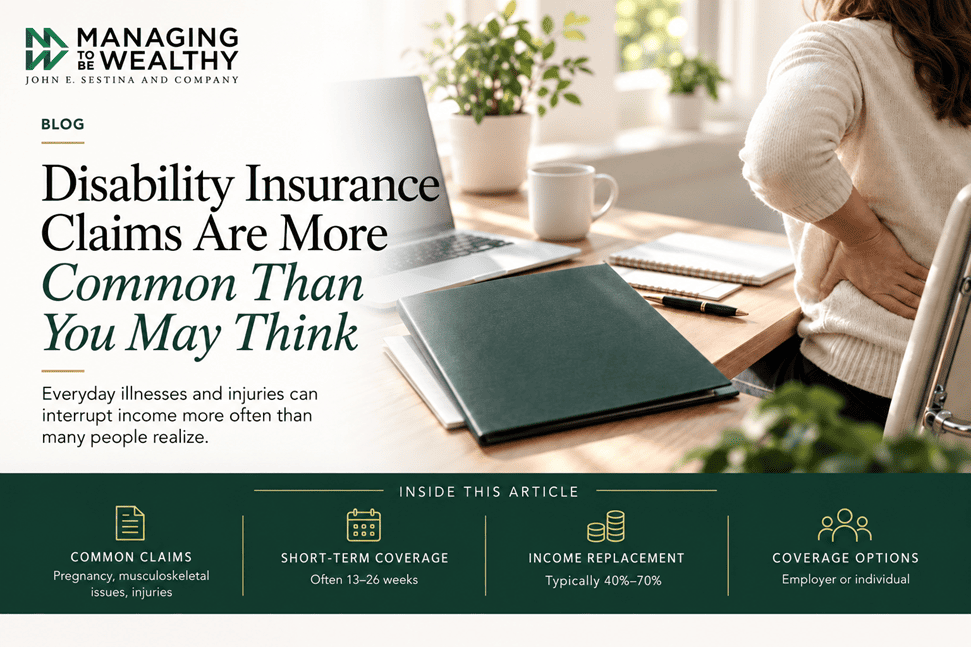
The Council for Disability Income Awareness (CDIA) reports the following leading causes of short-term disability claims:
- Pregnancies (22%)
- Musculoskeletal disorders (17%)
- Injuries (fractures, sprains) (11%)
- Mental health conditions (10%)
- Digestive disorders (7%)
These conditions are more common than many people realize, and even a temporary limitation can interfere with work, household responsibilities, and a family’s ability to meet ongoing expenses.
The figures above relate to short-term disability claims. According to Guardian, short-term disability insurance typically provides benefits for 13 to 26 weeks and may replace approximately 40% to 70% of income during the benefit period. Long-term disability insurance is designed for qualifying illnesses or injuries that continue beyond the short-term benefit period and may provide benefits for a specified number of years or, under some policies, until retirement age.
Short-term and long-term disability coverage are often offered through work, and in some cases are provided at no cost by your employer. Depending on your situation, you may also choose to supplement that coverage with an individual disability policy.
For people whose household finances depend on earned income (that’s most of us), disability insurance is an important part of a comprehensive financial plan. Thoughtful coverage can help protect cash flow and reduce financial stress when an illness or injury interrupts work.