
It’s not something most people like to think about—but it matters more than many realize.
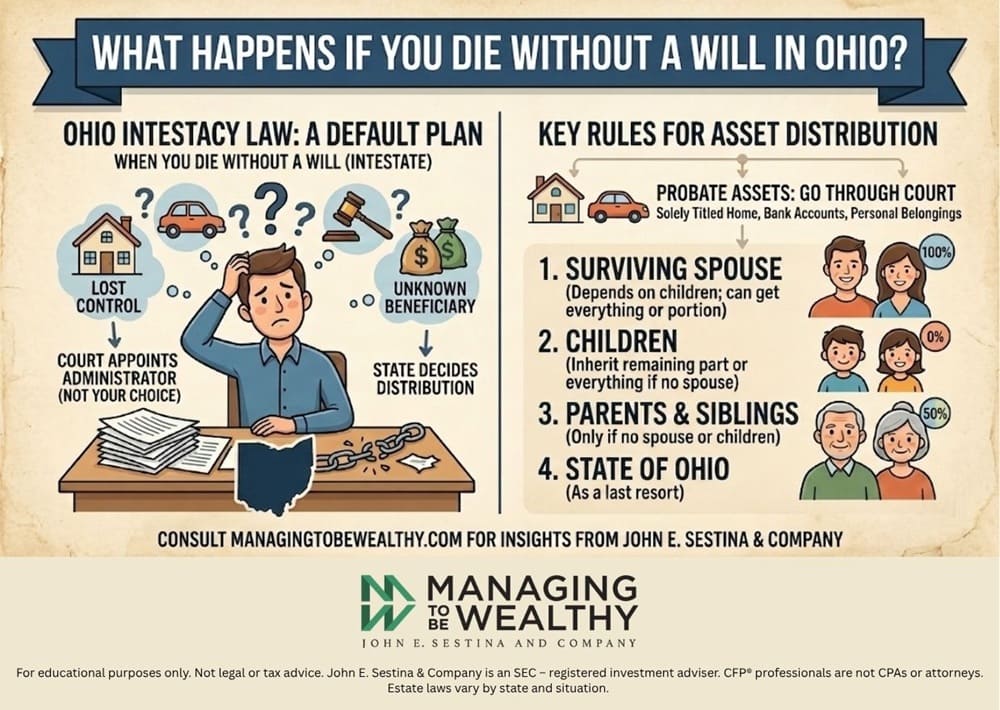
If you die without a will in Ohio, your assets are distributed according to the state’s intestacy laws. That means you lose control over who inherits your property, and instead, Ohio applies a fixed legal formula based on your family structure. While this system is designed to be orderly, it doesn’t take your personal wishes into account, which can create confusion and added stress for your loved ones.
When this happens, the probate court appoints an administrator to manage your estate. This person may not be someone you would have chosen, and the process often involves court oversight, added costs, and potential delays. The administrator is responsible for gathering assets, paying debts, and distributing what remains according to state law—not personal preference.
Who inherits depends on your situation. A surviving spouse may receive all or a portion of the estate, depending on whether there are children and whether those children are shared. If children inherit—especially minors—their portion is typically held under court supervision until adulthood, which can limit flexibility in how those assets are used. If there is no spouse or children, assets pass to other relatives, and in rare cases, to the state.
Your home is often one of the most significant assets affected. If it is solely in your name, it generally goes through probate and is distributed under intestacy rules. This can result in shared ownership between family members, which may complicate decisions about whether to keep or sell the property.
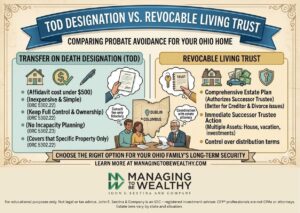
Not all assets go through this process. Accounts or policies with named beneficiaries—such as life insurance, retirement accounts, or transfer-on-death designations—typically pass directly to those individuals. However, any assets without these designations may still be subject to probate and state distribution rules.
Without a will, the court may also require the estate administrator to obtain a fiduciary bond, adding another layer of cost. You also lose the ability to name an executor or guardian for minor children, leaving those decisions to the court.
Ohio does offer a simplified process for smaller estates in certain situations, but even then, legal procedures and documentation are still required.
At its core, intestacy is a default plan—it provides structure, but not personalization. It doesn’t account for blended families, long-term planning for children, or specific wishes about how and when assets should be distributed.
Creating a will allows you to make those decisions intentionally. It gives you control, provides clarity for your family, and can help reduce administrative burden during a difficult time.
DISCLOSURE: This article is provided for general educational purposes only and should not be interpreted as legal, tax, or accounting advice. John E. Sestina & Company is a registered investment adviser. Our CFP® professionals are not CPAs or attorneys. Estate planning laws, including probate and transfer‑on‑death rules, vary by state and individual circumstances. Readers should consult qualified legal and tax professionals before making changes to property ownership or estate plans.